The Evolution of Graphic Arts: A Brief History
Graphic arts did not evolve in a straight line. They advanced whenever a culture found a better way to record, reproduce, and distribute ideas at scale.
Readers usually come to this subject with a practical set of questions:
- Where do graphic arts actually begin: with cave walls, manuscripts, or the printing press?
- Which technologies changed the field the most, and which ones merely made production faster?
- How did photography, mass printing, and digital software alter what designers could do?
- Why does this history still matter for teams making visual decisions today?
Paul Rand described design as “the silent ambassador of your brand.” The line is famous because it is efficient, not because it is sentimental. Graphic arts have always had that double job: make communication visible, then make it persuasive.
That long history matters because visual communication expanded whenever the underlying tools improved. Encyclopaedia Britannica’s overviews of graphic art and the printing press both point to the same pattern: new methods of reproduction changed not just appearance, but reach, cost, and public influence. In other words, the medium kept changing the business case.
I will keep this article focused on decision points rather than nostalgia. You will see how graphic arts moved from symbolic marks to print systems, from industrial image-making to digital workflows, and why that sequence still shapes branding, packaging, publishing, and interface design.
What graphic arts includes
Graphic arts is the broad field of creating visual communication through drawing, printing, lettering, illustration, photography, and later digital composition. The term has expanded over time, but the core idea is stable: use visual form to convey information, identity, narrative, or persuasion.
For practical reading, it helps to separate a few related terms:
| Term | Meaning | Why it matters |
|---|---|---|
| Graphic arts | The umbrella category for visual communication and reproduction methods. | It covers the whole system, not only modern design software. |
| Graphic design | The planned arrangement of text, image, color, and layout to communicate clearly. | This is the modern discipline most people mean, even when they use the broader term. |
| Printmaking | The process of creating images through reproducible plates, blocks, stones, or screens. | It introduced the logic of repeatable image distribution. |
| Typography | The design and arrangement of letterforms. | Control over type changed reading, hierarchy, and brand recognition. |
| UX | User experience: the total quality of a person’s interaction with a product or interface. | It shows how graphic arts moved from surfaces into systems. |
I use the broader term here because it reveals something useful: today’s design teams did not appear from nowhere. They inherited habits from scribes, printers, engravers, poster artists, photographers, and production specialists who were solving the same problem in different toolsets.
Early forms of graphic communication
The earliest phase of graphic arts predates the word “design” by several thousand years. Humans were organizing images long before they were organizing departments. Cave paintings, carved symbols, seals, and early writing systems all show the same impulse: convert memory, identity, ritual, and instruction into visible marks that can outlast a conversation.
Ancient cave paintings and Egyptian hieroglyphics are useful examples because they combine image and meaning rather than treating them as separate categories. A painted bison was not a brand campaign, obviously, but it did establish a visual code inside a cultural context. Once a society begins using consistent symbols, the groundwork for graphic communication is already in place.
That is why the history of graphic arts is partly a history of standardization. Scripts became more regular. Manuscript illumination added hierarchy and decoration. Religious and political institutions used visual formats to reinforce authority. The specific messages changed, but the logic did not: visibility creates influence when enough people can recognize the same signal.
Why manuscripts matter more than they seem
Before mechanical reproduction, manuscripts carried design discipline in slow motion. Scribes and illuminators had to make decisions about spacing, ornament, page balance, initials, and readability. The pace was painfully manual by modern standards, but the principles of hierarchy and visual emphasis were already developing.
Illuminated manuscripts also reveal an early truth that still holds: visual richness can increase attention, but it must still serve the content. Decoration without structure ages badly. Medieval scribes would not have phrased it like a modern art director, but the problem would have been familiar.
The printing press changed the scale of everything
The decisive break came in the mid-fifteenth century with movable type and the European printing press. Mechanical printing did more than speed up copying. It lowered the cost of duplication, improved consistency, and made visual communication repeatable on a commercial scale.
This is the phase where graphic arts begin to resemble an industry instead of a noble craft. Typography becomes a system. Page design becomes more standardized. Printers become mediators between content, readability, and distribution. The social effect was large because the press supported literacy, religious debate, political circulation, and eventually advertising. Quietly, then all at once, design acquired reach.
The Metropolitan Museum of Art’s overview of printmaking in Europe shows how prints became vehicles for both artistic experimentation and wider distribution. That is the key point. Reproduction was no longer a side effect. It became the operating model.
Technological turning points that reshaped the field
Once printing was established, the next centuries were shaped by improvements in speed, image fidelity, color control, and production volume. Not every technical upgrade changed culture equally, but a handful did.
1. Engraving, lithography, and the rise of repeatable image systems
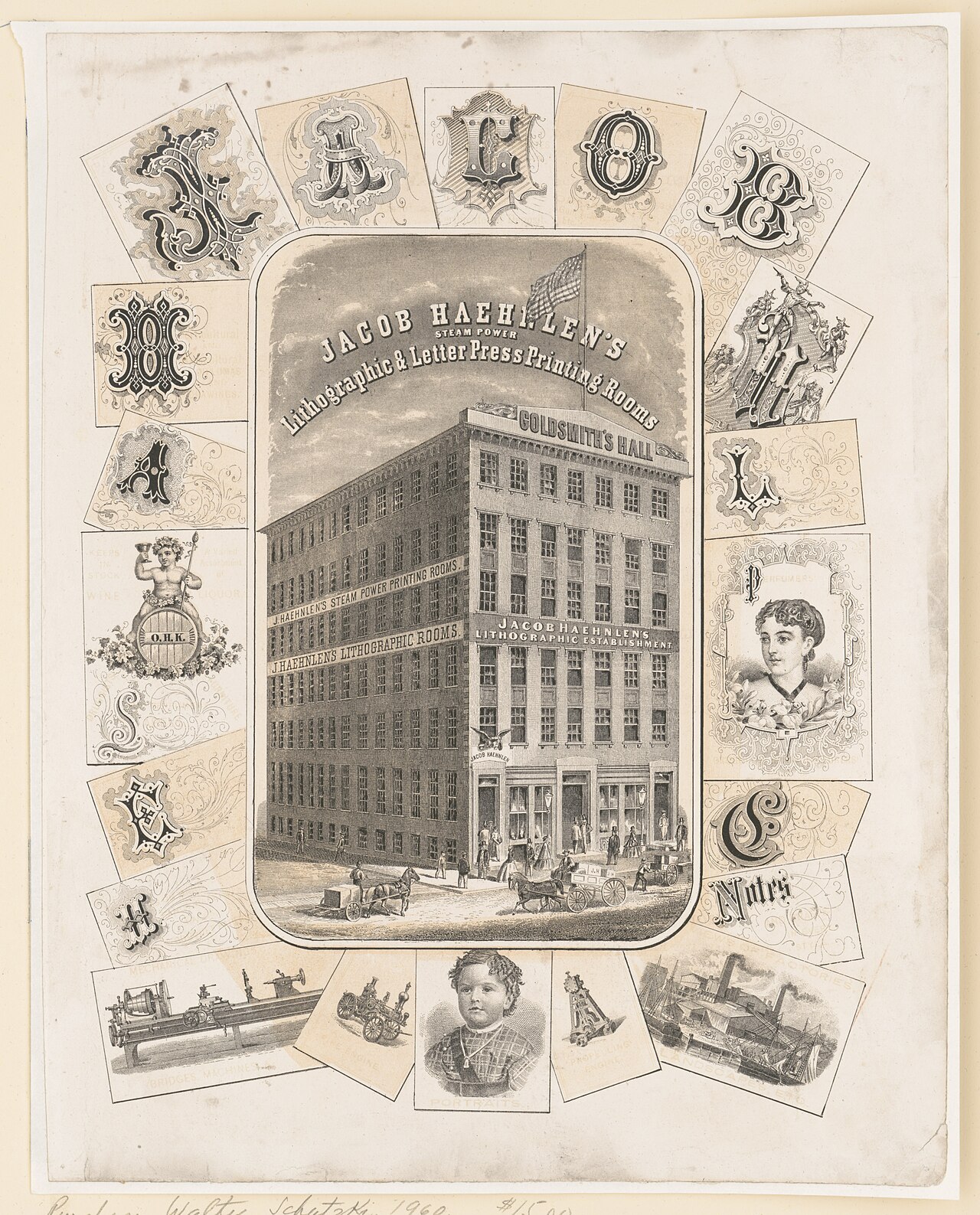
Engraving and etching gave artists and publishers more precise ways to reproduce images. Lithography, developed at the end of the eighteenth century, expanded that capability further by making image production faster and more flexible for posters, labels, and commercial work. If you care about packaging, advertising, or branded print, this is one of the pivotal phases.
Lithography mattered because it supported both detail and scale. Businesses could produce richer visuals without treating every image as a bespoke artwork. That shift helped visual culture move into streets, shops, newspapers, and product labeling. Graphic arts became more public, more commercial, and frankly less polite. That was probably inevitable.
2. Photography changed truth, evidence, and composition
The arrival of photography in the nineteenth century expanded graphic arts from interpretation toward capture. Images no longer had to be entirely drawn, engraved, or painted to appear in visual culture. They could be recorded, processed, reproduced, and later merged with type and layout.
Photography changed design in at least three ways:
- Credibility: Photographic images often carried a stronger claim to realism than illustration.
- Composition: Designers could combine type, cropping, contrast, and photographic focal points in more dynamic layouts.
- Speed: Editorial and commercial communication could respond to events and products more quickly.
The history of photography helps explain why this mattered beyond art circles. Once photography entered magazines, advertisements, catalogs, and public campaigns, the visual expectations of audiences changed. Illustration remained important, but the benchmark for realism moved.
3. Industrial printing made consistency a business requirement
Steam-powered presses, rotary presses, and improved paper manufacturing turned graphic arts into a true production discipline. At this stage, design was no longer only about creative invention. It also became about throughput, repeatability, and quality control.
That sounds operational because it is. A poster, folder, carton, or catalog only works at scale if the process holds together across hundreds or thousands of impressions. This is one reason modern print businesses still care so much about substrates, color calibration, finishing, and press conditions. The technology changed, but the cost of inconsistency never really went away.
For Troserma’s own production context, that heritage still shows up in practical choices about materials, print finishes, and promotional formats. The company’s homepage reflects that broader view of graphic arts as a mix of communication and fabrication rather than decoration alone.
4. Modernist design simplified the message
By the early twentieth century, design movements such as Bauhaus, De Stijl, Constructivism, and the Swiss Style pushed graphic arts toward greater clarity, geometric order, and functional hierarchy. Ornament did not disappear, but it lost its monopoly.
This mattered because the field began to treat legibility and structure as strategic assets. A poster, identity system, or publication could be persuasive precisely because it was controlled, reduced, and clear. That emphasis shaped corporate identity programs, transit signage, editorial layout, and much of the visual logic still visible in brand systems today.
If you have ever wondered why many successful packaging layouts use strong grids, limited type families, and disciplined color hierarchy, the answer is historical before it is fashionable. Design systems inherit more from modernist order than from internet opinion.
5. Desktop publishing moved production onto the screen
The digital transition in the late twentieth century was the next major revolution. Personal computers, page-layout software, digital type libraries, scanners, and image-editing tools collapsed large parts of the old production chain into one workstation. Tasks that once required specialized departments could now be handled by smaller teams.
Desktop publishing did two things at once. It democratized access to graphic production, and it increased the demand for judgment. Software removed friction, but it did not remove the need for hierarchy, proportion, or restraint. In fact, cheap access to every effect known to humanity created a fresh incentive to misuse them.
Still, the upside was enormous. Designers could test faster, revise faster, and move from concept to print-ready files with less mechanical overhead. That change is one reason graphic arts now overlaps so naturally with digital marketing, packaging systems, web content, and cross-channel brand management.
How cultural shifts redirected graphic arts
Technology explains a great deal, but not everything. Graphic arts also changes because culture changes. New audiences, new politics, new media habits, and new commercial models all alter what visual communication is expected to do.
Mass media made visual persuasion ordinary
Newspapers, magazines, cinema posters, packaging, and broadcast advertising taught audiences to decode visual messages quickly. Graphic arts moved from specialist environments into everyday decision-making. People were no longer only reading information. They were reading signals: credibility, novelty, status, urgency, trust.
That shift is one reason branding became so important. Once markets became crowded, the visual system around a product mattered almost as much as the product’s description. Logos, labels, color signatures, and packaging structures turned into shortcuts for memory.
Social media compressed the timeline
Social platforms accelerated another change: graphic arts now operates in shorter feedback loops. A poster once had days or weeks to circulate in context. A digital visual may have seconds. The consequences are mixed. Designers can test messages quickly, but they also face intense pressure to simplify, adapt, and repurpose work for multiple formats immediately.
That environment has revived an old discipline in a new setting: visual hierarchy. When screens are crowded and attention is scarce, the work still depends on contrast, clarity, sequencing, and the relationship between image and text. The tools may be digital, but the underlying rules would not surprise an experienced print designer.
UX shows where graphic arts went next
One of the clearest modern developments is the integration of graphic thinking into user experience. Designers are not only shaping how things look; they are shaping how people move through information, decisions, and interfaces.
Nielsen Norman Group’s definition of user experience is useful here because it frames design as the total interaction, not the decorative layer. That matters historically. Graphic arts began with marks on surfaces, but it now extends into flows, states, readability, interaction cues, and service logic.
For smaller businesses, that means the old divide between “print design” and “digital design” is less important than it once was. A brand system now has to work across cartons, sales sheets, websites, product pages, social posts, and support interfaces. The medium changes. The requirement for coherence does not.
What this history means for modern design practice
The practical lesson is not that every designer needs to become a historian. The better lesson is that current best practices make more sense when you know which problem they were invented to solve.
A short timeline of major shifts
| Period | Milestone | Lasting effect |
|---|---|---|
| Prehistory to antiquity | Symbols, cave paintings, and early writing systems | Established the link between image, meaning, and shared recognition. |
| Medieval period | Manuscript layout, initials, and illuminated pages | Developed hierarchy, pacing, and page-level composition. |
| 15th to 19th centuries | Movable type, engraving, lithography, industrial presses | Turned graphic reproduction into a scalable commercial system. |
| 19th to 20th centuries | Photography, posters, advertising, modernist grids | Made visual persuasion faster, broader, and more systematic. |
| Late 20th century to now | Desktop publishing, web design, social media, UX | Merged graphic arts with digital workflows and interaction design. |
The timeline looks tidy when compressed into a table. The lived reality was messier. Old methods remained in use while new ones spread unevenly across regions, industries, and budgets. That overlap is important because design history rarely replaces one era overnight; it layers tools and expectations until the market finally changes its default.
Three takeaways are worth keeping:
- Technology expands options, but judgment remains the scarce resource. Every major leap, from movable type to desktop publishing, increased access and reduced production friction. None removed the need for structure.
- Cultural context shapes design priorities. Visual language changes when audiences, politics, commerce, and media habits change. Trend cycles are rarely random; they usually reflect a broader shift in attention or distribution.
- Production realities still matter. Good design is not only a sketch or a mockup. It has to survive printing, scaling, readability constraints, and user interaction. Graphic arts has always been part craft, part system.
That is also why a resources library is useful. Troserma’s Recursos page is a practical next step if you want to connect the historical arc to current print, packaging, and promotional materials work.
Conclusion
The evolution of graphic arts is really the evolution of visible decision-making. From early symbolic marks to mechanical printing, from photography to digital layout and UX, each phase expanded the reach of design while raising the cost of carelessness. The tools improved. The responsibility did not.
If you are making design choices today, the sensible move is to ask which historical problem you are solving now: clarity, reproduction, persuasion, scale, or consistency. Most projects involve all five. History is useful precisely because it strips away the myth that good design is magic. More often, it is the result of better tools meeting better priorities.