Designing for Different Cultures: A Global Approach
Design does not become global by accident. It becomes global when someone bothers to notice that symbols, colors, reading order, hierarchy, and even silence do not travel cleanly.
Most designers learn this the same unpleasant way: a layout looks sharp in one market and subtly wrong in another. Then the questions start. Which colors feel trustworthy here? Which icons are harmless in one country and idiotic in another? How do you keep the brand consistent without pretending every audience thinks, reads, and decodes visual cues the same way?
That is the real problem, and it is not theoretical. The Nielsen Norman Group treats cross-cultural adaptation as a practical design problem, not an academic one, while the W3C Internationalization work keeps reminding teams that language and layout conventions are part of the product, not decorative afterthoughts. If you want the short version, here it is: global design fails when teams assume one visual language can speak for everybody.
This article breaks the problem into parts you can actually use: what cultural design considerations matter most, where cultural differences show up in real graphic work, how to design for a global audience without turning the brand into a beige compromise, and what successful cross-cultural design work tends to have in common. The goal is not warmth. The goal is fewer avoidable mistakes.
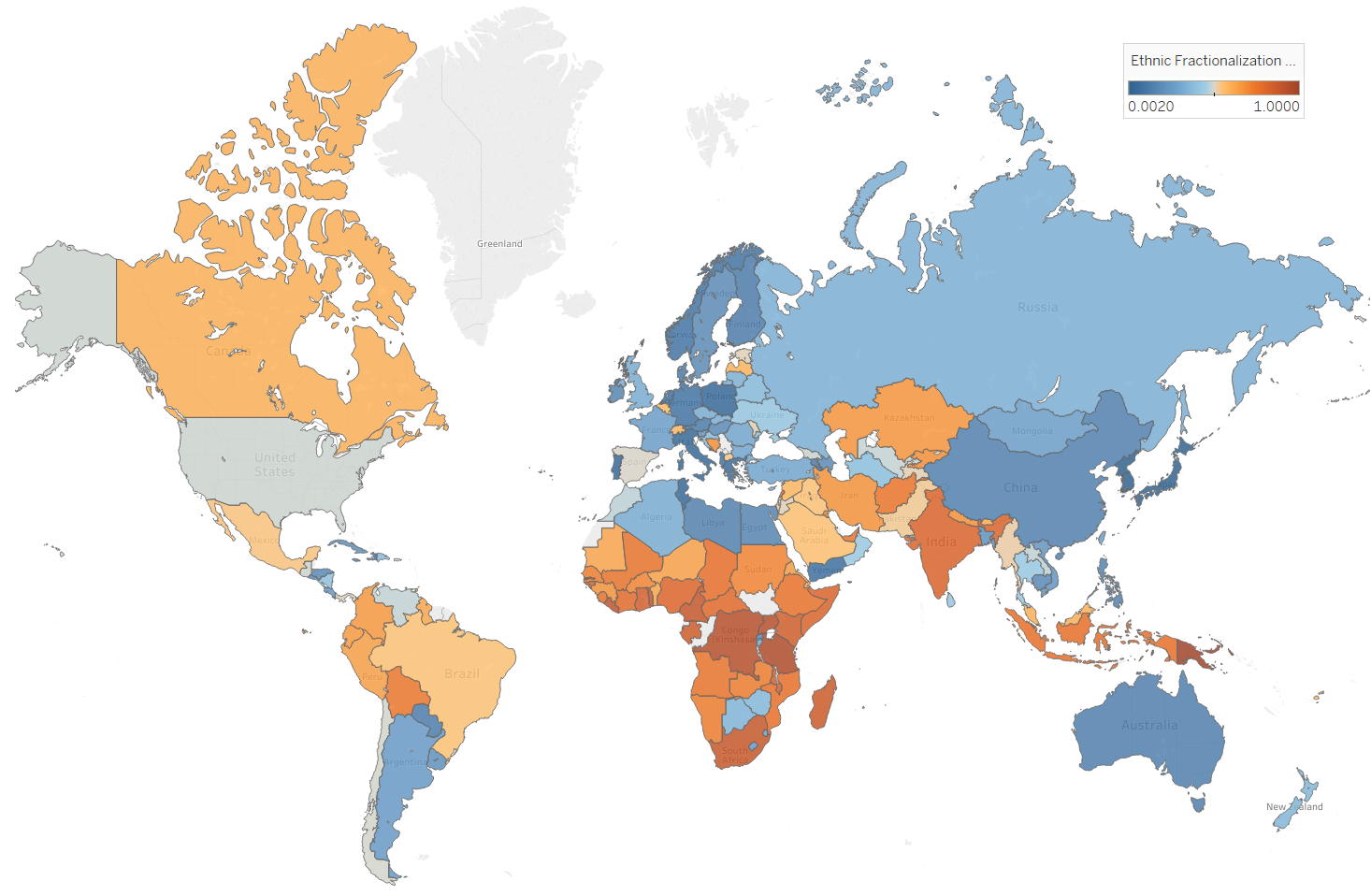
Overview of cultural design considerations
Culture is not a mood. It is a set of defaults. People do not notice the defaults until a design violates them. That is why a layout can feel polished to one audience and vaguely hostile to another without any obvious bug. The typography may be fine. The spacing may be fine. The message still lands wrong because the design assumes the wrong reader habits.
The simplest way to think about cultural design is to separate the visible layers from the invisible ones. The visible layers are the easy part: color, imagery, symbols, characters, layout, and motion. The invisible layers are where the trouble lives: expectations about hierarchy, reading direction, emotional tone, directness, formality, and whether a visual cue should be literal or suggestive.
That is why translation alone is weak medicine. A translated headline wrapped in an unchanged interface can still fail if the text expands, the date format is wrong, the icon set carries the wrong connotations, or the imagery looks emotionally off. In the worst cases, the content is correct and the design still makes the user feel that the brand did not bother to understand them. People notice that. They may not say it in those words, but they absolutely notice it.
If you need a practical reason to care, look at the difference between globalization advice and actual global work. The Pratt Institute iXD piece on globalization makes the point plainly: visual design for international work is about more than wording. It is about what the audience can decode quickly, confidently, and without embarrassment. That last part matters more than most teams admit.
For a print-focused brand like Troserma, the same logic applies across packaging, folders, brochures, and promotional materials. A mark that feels clean in Barcelona may need different supporting imagery, spacing, or palette balance when it is used for a U.S. audience, a multilingual audience, or a local market with different visual habits. The asset does not become less branded. It becomes more honest.
Terms you need to keep straight
People love vague words until a project needs a decision. Then vocabulary suddenly matters. These terms are worth keeping distinct:
- Internationalization is the work of building a system so it can adapt across languages and regions without breaking.
- Localization is the actual adaptation for a specific market: language, format, imagery, tone, and sometimes layout.
- Transcreation is a stronger form of adaptation where the message is remade to fit another culture rather than copied mechanically.
- Visual semantics is the meaning people assign to icons, colors, shapes, and composition.
- Reading direction is the path the eye is expected to follow, which is not identical everywhere.
- Context density is how much information a layout expects the reader to process at once.
- Accessibility is the part nobody gets to treat as optional when readability matters, which is always.
Those definitions are not academic perfume. They map to operational choices. If your project requires localization, the type system has to survive expansion. If it requires transcreation, the imagery may need to change, not just the copy. If the design depends on a strong reading direction, you need to know whether that direction still makes sense in the target market. The design does not care about your intention. It only cares whether it works.
The W3C’s work on internationalization is useful because it keeps the conversation grounded in implementation rather than folklore. Design systems that support the wrong locale behavior are just organized failure. Pretty, yes. Functional, no.
Examples of cultural design differences
Cross-cultural design breaks in patterns. Once you know the patterns, you can inspect a layout before the damage ships. The table below is the short version.
| Design element | What changes across cultures | What to check | Common failure mode |
|---|---|---|---|
| Color | Symbolic meaning, emotional weight, and even ceremony can shift by region | Does the palette carry the intended tone in the target market? | Picking a color because it means one thing in one place and something very different elsewhere |
| Icons and symbols | Signs can be intuitive, neutral, or offensive depending on context | Will the icon be read literally, metaphorically, or not at all? | Using a universal-symbol fantasy that collapses under real use |
| Imagery | People, gestures, environments, and clothing can signal belonging or exclusion | Does the image respect the audience’s self-image and norms? | Using stock photos that look vaguely international and completely unconvincing |
| Typography | Scripts, line length, spacing, and expansion change by language | Can the type system hold up in longer translated text? | Designing for English only and hoping the other languages “fit somehow” |
| Layout | Reading direction, information order, and density vary | Is the hierarchy still clear when the eye moves differently? | Forcing one market’s scanning pattern onto everybody else |
| Numbers and dates | Formatting, separators, and calendar conventions differ | Are prices, dates, and measurements locale-safe? | Making a design feel polished while the data format quietly lies |
Color is the most obvious trap, so teams obsess over it and ignore the rest. That is backward. Color matters, yes, but it only becomes dangerous when it is paired with the wrong symbol, the wrong image, or the wrong context. A blue palette may feel stable in one market and sterile in another. A red accent may suggest urgency, celebration, luck, or warning depending on where the design lands. The color is not the whole problem. It is one layer of the problem.
Icons are the second trap. Designers like icons because they feel efficient. That confidence is often fake. A hand gesture, a mailbox shape, a payment symbol, or a directional arrow can carry baggage that is invisible to the team using it. If the icon needs a caption to be understood, it is not universal. It is a guess with a clean outline.
Imagery is where lazy global design gets exposed. A “diverse” stock photo of five people in a glass office does not prove cultural sensitivity. It proves the design budget included one overused asset and no one wanted to fight for a better choice. Better work uses images that reflect local reality, relevant environments, and a tone that matches the audience. People can tell when the photo was selected by a committee that was trying to be safe rather than true.
Typography and layout are less glamorous but more serious. Scripts expand, line breaks move, and right-to-left languages do not politely adapt to left-to-right assumptions. That means design systems need flexible containers, not just pretty sample screens. If your layout only survives in one language, it is not a global layout. It is a local layout wearing a fake passport.
Tips for designing for a global audience
There is no magic global style. There is only a process that avoids stupidity. Here is the process I trust because it catches failure before it becomes expensive.
1. Define the audience by market, not by fantasy
“Global audience” is too vague to design for. Start with the actual markets. Who are the users, where do they live, what languages do they read, and what kinds of visual conventions do they already trust? A U.S. buyer, a Japanese user, and a Spanish-speaking procurement manager do not need identical design cues just because they all use the same website. That myth has killed enough layouts already.
2. Separate brand constants from local variables
The brand should keep a stable core: voice, logo logic, basic palette logic, and primary offer structure. Everything else should be allowed to flex. Imagery, microcopy, examples, cultural references, and even the amount of whitespace may need adjustment. The trick is to protect the brand’s spine while letting the skin change. If everything is rigid, localization becomes vandalism. If everything is fluid, the brand disappears.
3. Use people who actually know the market
Not “someone who once visited there.” Not “someone with a cousin there.” Actual readers, translators, local reviewers, or subject-matter people who can tell you when the layout says one thing and the culture hears another. The NN/g article on cultural nuances is blunt about this point: testing with international audiences reveals problems that local teams miss because they are blind to their own norms. That is not exotic wisdom. It is basic quality control.
4. Build for text expansion and contraction
English is often short and selfish. Other languages are not required to be as compact as your mockup. Buttons, headings, and labels need room to breathe when translated. Avoid fixed-width traps. Avoid fake line breaks. Avoid hero banners that only work because one line of English happened to fit the perfect pixel count. That is not design. That is lucky formatting.
5. Make the visual hierarchy survive translation
If the design only works when a particular slogan sits in a particular place, then the system is brittle. Move copy around. Change language lengths. Swap in local imagery. The hierarchy should survive the test. If the central message disappears the moment text expands, the design was relying on luck instead of structure.
6. Check accessibility while you are there
Cultural sensitivity without accessibility is just selective politeness. Readability still matters. Contrast still matters. Font size still matters. The W3C contrast guidance is one of those unglamorous references that saves you from shipping elegant nonsense. If the text cannot be read, the message is dead. That is not a design opinion. It is a basic functional fact.
7. Document decisions instead of relying on memory
Global design work produces lots of local exceptions. If you do not document why an image, color, or layout decision changed for one market, the next person will “standardize” it later and reintroduce the problem. A simple decision log is enough. Write down what changed, why it changed, and which market or audience forced the change. Boring documentation beats heroic guesswork every time.
If your team is managing multiple regional approvals, a neutral web app builder can be a practical way to track variants, comments, and sign-off without burying the process in spreadsheet archaeology. The point is not software worship. The point is keeping the workflow visible enough that people stop making the same mistake twice.
8. Treat local review as a design input, not a final stamp
Local reviewers are not there to bless a finished object that no one can change. They are there to catch the nonsense before it hardens. If a market reviewer says the image feels off, the layout should not be defended like sacred scripture. Change it, or at least understand the mechanism before you reject the feedback. Most bad global work survives because the team decided their intuition was more elegant than evidence. It rarely is.
Case studies of successful cross-cultural designs
Real examples matter because they show how good cross-cultural work behaves under pressure. The pattern is usually the same: the best work does not try to erase difference. It reduces friction around difference.
Nielsen Norman Group: design changes should follow the market
The NN/g crosscultural design article is a useful case study because it treats localization as a spectrum. Sometimes you only translate. Sometimes you adapt the content structure. Sometimes you change the design itself. That framing matters because it stops teams from treating all markets as a single translation problem. The lesson is practical: do the smallest change that still makes the design fit the audience, and do not confuse sameness with consistency.
Content Design London: content and culture work together
The Content Design London piece on bridging cultures is a good reminder that “global” content often fails because the tone is built on one culture’s assumptions about how direct, formal, or explanatory communication should be. Good cross-cultural work does not only swap words. It changes the relationship between the message and the reader. That is why a design can look clean and still feel wrong. Clean is not the same thing as native.
Pratt iXD: globalization is bigger than translation
The Pratt iXD article on globalization makes another useful point: icons, colors, and images often need localized adjustment because symbolism changes with context. That is a sober rule, not a dramatic one. It means the same creative decision can be clever in one market and careless in another. The winning move is to assume the market knows more than the mockup.
Why these examples work
All three examples do the same thing in slightly different ways. They respect local norms without pretending the brand has to collapse into a different identity for every region. They also resist the fantasy that there is a single universal visual grammar. There isn’t. There are just overlapping conventions, and some of them are louder than others.
If you want one diagnostic question to keep handy, use this: what in this design depends on a culture-specific assumption that we have not named yet? That question saves time because it points directly at the hidden rule. Once you see the rule, you can decide whether to keep it, adapt it, or remove it. Before that, you are just decorating assumptions.
What usually goes wrong
The failure modes are boring, which is why they are common.
- One-market thinking. The design team builds for their own habits and calls it “universal.”
- Symbol worship. An icon or color is treated as inherently meaningful when it is only locally meaningful.
- Stock-image diplomacy. The team uses generic multicultural imagery to avoid making a real choice.
- Text rigidity. The interface cannot survive translated copy without breaking the layout.
- Approval theater. Local feedback is collected too late, when the design is already too expensive to change cleanly.
- Accessibility afterthought. Contrast, font size, and reading clarity are sacrificed to preserve visual style.
Each of those mistakes is survivable in isolation. Together they produce the familiar result: a brand that looks polished to the internal team and half-baked to everyone else. That gap is expensive. It slows trust, adds revision cycles, and turns the design system into a correction machine. Nobody needs that. The market certainly does not.
How to review a global design before it ships
I prefer a short, brutal review checklist. It is less romantic than a mood board and far more useful.
- Read the headline and call-to-action in the target language or locale and confirm that the tone still sounds intentional.
- Check whether any image depends on a local gesture, face, object, or setting that the audience may not recognize.
- Verify that the color palette still supports hierarchy, contrast, and emotional tone after translation or localization.
- Test longer and shorter text variants so the layout does not collapse when the copy changes.
- Confirm that dates, numbers, currency, and units match the market the page is trying to serve.
- Ask a local reviewer what feels “off” before asking what looks nice.
That last one is the good one. Designers often ask whether a page is pretty when they should be asking whether the page feels native. Pretty is cheap. Native takes work.
For teams maintaining a broader materials or resources hub, the local starting points are the Troserma homepage and the Recursos page. Those are useful references because global design work is never really just one page. It touches the whole system: landing pages, support copy, downloadable materials, and the trail of follow-up content that has to stay consistent after the first impression is gone.
Conclusion
Designing for different cultures is not about sanding off every edge until nothing offends anybody. That kind of design is usually just empty. The actual job is harder: keep the brand coherent while adapting the parts that depend on local meaning, local habits, and local reading patterns.
The safest rule is simple: assume your first draft is culturally narrower than you think, then test it against real audience behavior before you get attached to it. Color, symbols, imagery, layout, and typography all carry meaning. If you do not inspect those meanings, they will inspect you later, usually through complaints, rewrites, or a polite silence that means the design missed.
Here is the short version of the diagnosis:
- Culture changes how people read visual signals.
- Translation does not fix a culturally narrow design.
- Local review is not optional if the audience is genuinely international.
- Accessibility and cultural sensitivity need to travel together.
- The best global designs are flexible systems, not frozen templates.
If you want the next sensible step, review one existing layout and identify every place it assumes a single audience. Then ask whether that assumption is actually doing useful work or just hiding a design shortcut. That is where the real cleanup starts.